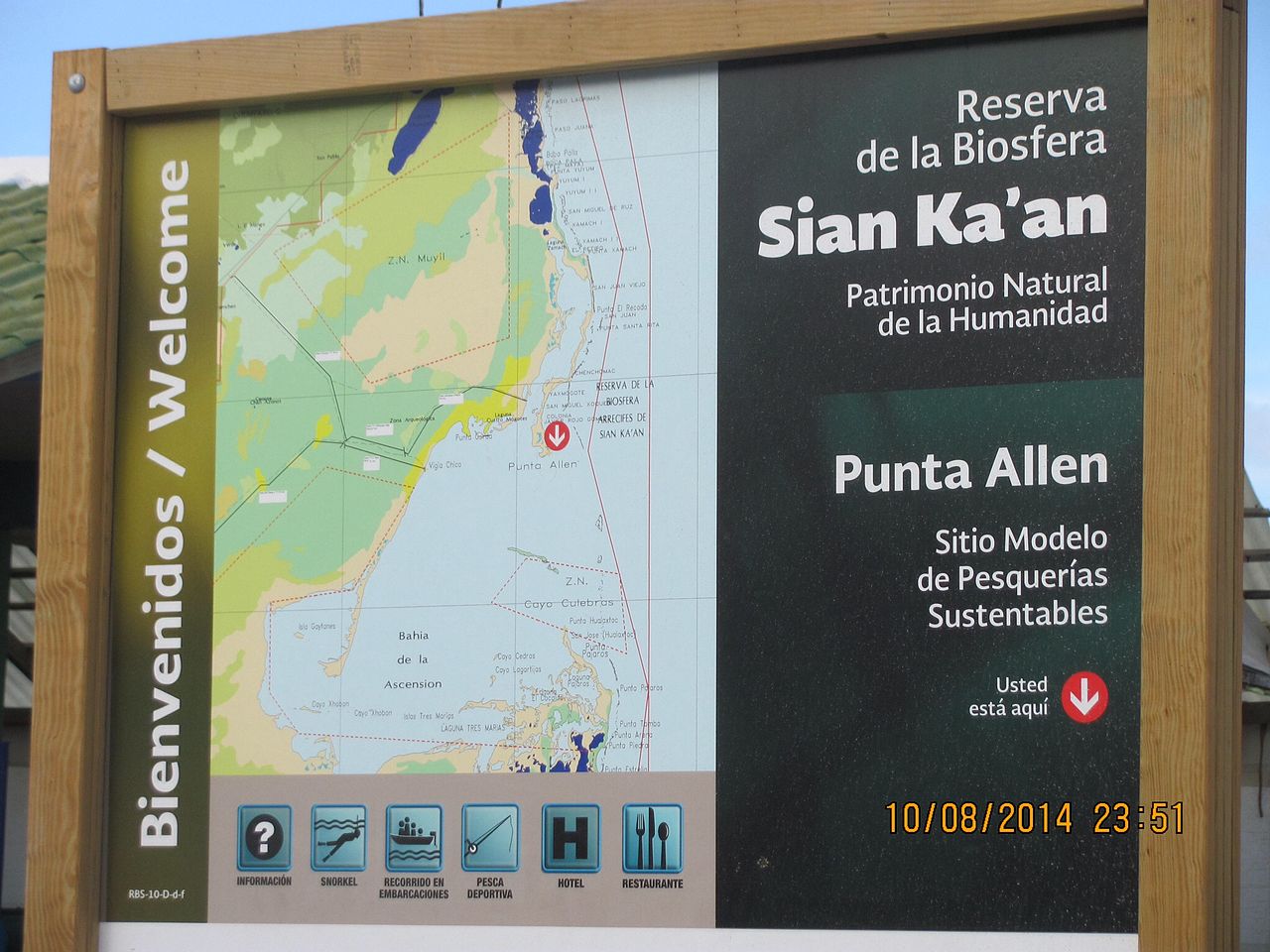
Sian Ka'an Biosphere Reserve is not a quick stop. It is a 5,280 km² protected wilderness — mangroves, lagoons, tropical forest, reef, and coastline — stretching along the Caribbean south of Tulum. The name means "origin of the sky" in Yucatec Maya, and on a clear morning at the lagoon edge, watching the light come up over the mangroves, the name makes sense.
This is not an eco-park with walkways and gift shops. There are no restaurants, no convenience stores, no paved roads inside the reserve. What you get instead is genuine, largely undeveloped nature: dolphins in the lagoons, crocodiles on the banks, sea turtles on the beaches, and over 300 bird species moving through the wetlands. A limited number of visitors are allowed in each day, which keeps the experience quiet in a way that feels increasingly rare on the Riviera Maya coast.
If you come expecting a polished attraction, you will be caught off guard. If you come prepared for a long day of raw nature and rough roads, it delivers like almost nowhere else in Quintana Roo.
 Roseate spoonbill at Sian Ka'an Biosphere Reserve
What Sian Ka'an actually is
Established as a biosphere reserve in 1986 and declared a UNESCO World Heritage Site in 1987, Sian Ka'an is the largest protected area in the Mexican Caribbean. It stretches from the wetlands and mangroves near Tulum down the coast to Punta Allen, a small fishing village roughly 55 km to the south. The reserve also includes a section of the Mesoamerican Barrier Reef, the second-largest reef system in the world.
The reserve is managed by Mexico's National Commission of Natural Protected Areas (CONANP), and access to the interior — the lagoons, the canal float, the mangrove channels — is through authorized community cooperatives and certified guides only. You cannot simply drive in and explore on your own.
This is a working landscape, not a theme park. Small communities inside the reserve make their living from fishing, particularly lobster. Tourism here is regulated deliberately to keep the ecological balance intact.
The two entrance points
There are two main ways into Sian Ka'an, and they offer quite different experiences:
The Muyil entrance (north): This is the easier, more accessible option. Located about 20 km south of Tulum on Highway 307, it leads to the Muyil archaeological site and the Chunyaxché lagoons. The road is paved most of the way. This is where most half-day tours operate, and it is the best option if you are short on time or traveling without a 4WD.
The Punta Allen entrance (south): Accessed via the coastal road from Tulum's Hotel Zone, passing through the Mayan Arch checkpoint. This route is rougher — a dirt road with significant potholes, especially in the rainy season. It takes about 3 hours from Tulum by 4WD. This is the route for full-day marine tours that include snorkeling on the reef, dolphin spotting, and lunch at Punta Allen.
For most visitors staying in Tulum or Playa del Carmen, the Muyil side is the practical choice. The Punta Allen route is rewarding but demands a full day and a sturdy vehicle.
The famous float: ancient Maya canals
The signature Sian Ka'an experience is the float down the ancient Maya canals — a network of channels cut through the mangroves over 1,500 years ago to connect inland settlements with the Caribbean coast. After a boat ride across the turquoise lagoons, you put on a life jacket, lie back in the gentle current, and drift through the mangrove tunnel for 30–45 minutes.
It is calm, quiet, and surreal. The water is fresh and cool, the mangroves arch overhead, and the only sound is birdsong and the occasional splash. Your boat captain meets you at the end with your shoes, and you walk back along a boardwalk through the wetlands.
The float is limited to a small number of people per day, which is why booking ahead matters — especially during the high season from December to April.
 Observation tower overlooking Sian Ka'an wetlands
Wildlife and what you might see
Sian Ka'an is home to remarkable biodiversity. Over 300 bird species pass through the reserve, including roseate spoonbills, frigatebirds, herons, ospreys, and — in season — flamingos. On the water, you may spot bottlenose dolphins in the lagoons, and manatees are present, though sightings are uncommon. Morelet's crocodiles are frequently seen sunning on the channel banks during boat tours.
Sea turtles — green and loggerhead — nest on the reserve's beaches from May to October, with hatching from July through November. The reef supports over 400 species of fish and 84 coral species, making snorkeling worthwhile for those who reach the Punta Allen side.
On land, the reserve harbors pumas, jaguars, ocelots, Baird's tapirs, and white-lipped peccaries, though these are rarely seen by casual visitors. You are far more likely to see iguanas, tropical birds, and the occasional crocodile.
Muyil ruins: an overlooked Maya site
The Muyil archaeological site (also called Chunyaxché) sits at the northern edge of the reserve, right where the lagoons begin. It is one of the oldest and longest-inhabited Maya sites on the Yucatán Peninsula, with evidence of occupation from around 350 BC through to the Spanish conquest.
The site is small and largely unexcavated, which is part of its appeal. The main feature is El Castillo, a 17-metre pyramid in the Petén style that resembles Tikal's main pyramid on a smaller scale. There is also a lookout tower, a boardwalk through the jungle, and two lagoons that connect to the canal system.
Most visitors walk through the ruins in under 30 minutes. Combined with the canal float and a lagoon boat ride, the whole experience fills a half-day comfortably. The site has a small entrance fee (around 65–148 MXN, depending on the current rate set by INAH) and is open from 8:00 to 17:00 daily.
 Morelet's crocodile in Sian Ka'an channels
Getting there
From Tulum by car: Head south on Highway 307. Muyil is signposted about 20 km south of Tulum town — roughly a 20-minute drive. There is free parking near the ruins entrance. For the Punta Allen route, continue past the Muyil turn-off, drive through Tulum's Hotel Zone to the Mayan Arch (the reserve entrance checkpoint), then follow the coastal dirt road for about 35 km. A 4WD is strongly recommended for this route, especially during the rainy season.
By tour: Most visitors book an organized tour from Tulum or Playa del Carmen. This is the easiest option and typically includes transportation, a certified guide, the boat ride, the canal float, life jackets, and lunch. Tours from Tulum to the Muyil side run roughly MXN 1,500–3,400 per person for a half-day. Full-day Punta Allen tours with snorkeling run MXN 3,500–4,500 per person.
By colectivo: You can take a colectivo from Tulum to the Muyil turn-off on Highway 307, then walk or take a taxi to the ruins entrance. This is the budget option but requires some flexibility and basic Spanish.
From Playa del Carmen: Tours depart from PDC regularly. The drive to Muyil takes about 1.5 hours by van. Some tours pick up directly from hotels in the Riviera Maya corridor.
When to go
The dry season (December to April) is the most reliable time to visit. Skies are clearer, mosquitoes are less intense, snorkeling visibility is better, and the canal float is less likely to be cancelled by weather. This is also the busiest period — book tours at least a few days ahead.
The rainy season (May to October) brings higher humidity, more mosquitoes, and a higher chance of weather cancellations. The trade-off is lush vegetation, turtle nesting on the beaches, and fewer visitors. If you are willing to accept the risk of a shortened tour, this can be a rewarding time to go.
Practical tips
Bring biodegradable sunscreen and insect repellent. Reserve regulations require biodegradable sunscreen for the canal float and boat activities. Mosquitoes are dense in the mangrove zones, especially at dawn and dusk.
Wear water shoes or sandals with grip. You will be getting in and out of boats, walking on boardwedges, and possibly wading in the lagoons.
Bring a reusable water bottle. There are no shops inside the reserve. Tours usually provide water, but carrying your own is wise.
Cash in pesos. Small purchases at the reserve — entrance fees, tips, snacks in Punta Allen — are cash only. There are no ATMs inside the reserve.
Start early. Most tours depart between 7:00 and 9:00 AM. The earlier you go, the calmer the water and the better your chances of spotting wildlife.
Motion sickness: The lagoon boat ride is generally calm, but the coastal road to Punta Allen is rough. If you are prone to motion sickness, take medication beforehand for the Punta Allen route.
Who it suits
Sian Ka'an is best for travelers who want nature over comfort. It suits couples looking for a quieter alternative to the busy Tulum beach scene, families with older children who can handle a boat ride and a float, and anyone interested in wildlife, birds, or Maya history.
It is less suited for travelers with limited mobility (boat transfers, uneven boardwalks), very young children (life jacket requirements, long day), or anyone expecting a polished, Instagram-ready experience. The rough roads and basic facilities are part of the deal.
If you want a genuine, uncrowded encounter with the Quintana Roo coast — mangroves, dolphins, ancient canals, and a landscape that has changed very little in centuries — Sian Ka'an is worth the effort. Just come prepared for a long day, bring your own water, and accept that the rough edges are part of what makes it work.
 Wooden bridge through Sian Ka'an mangroves