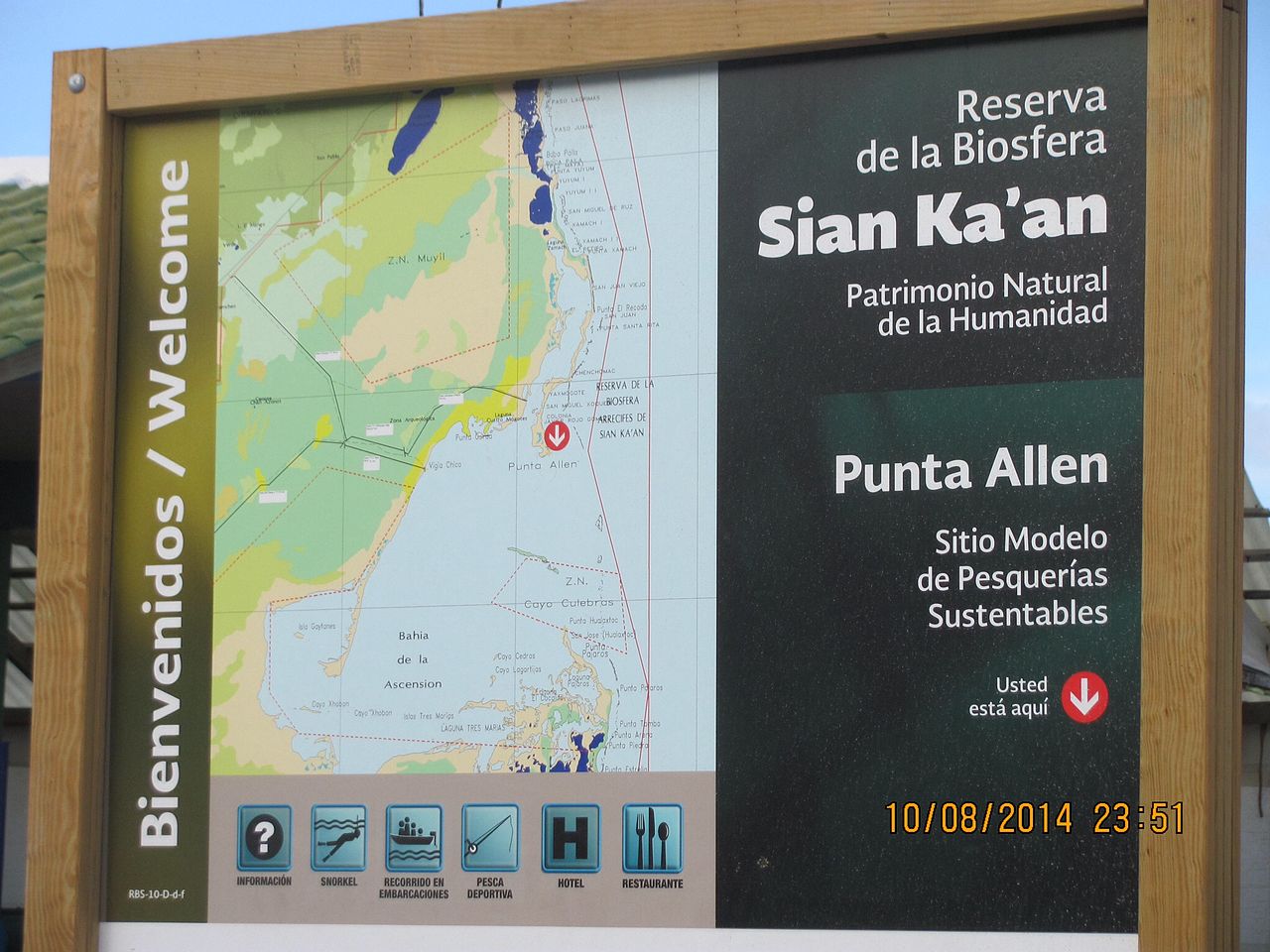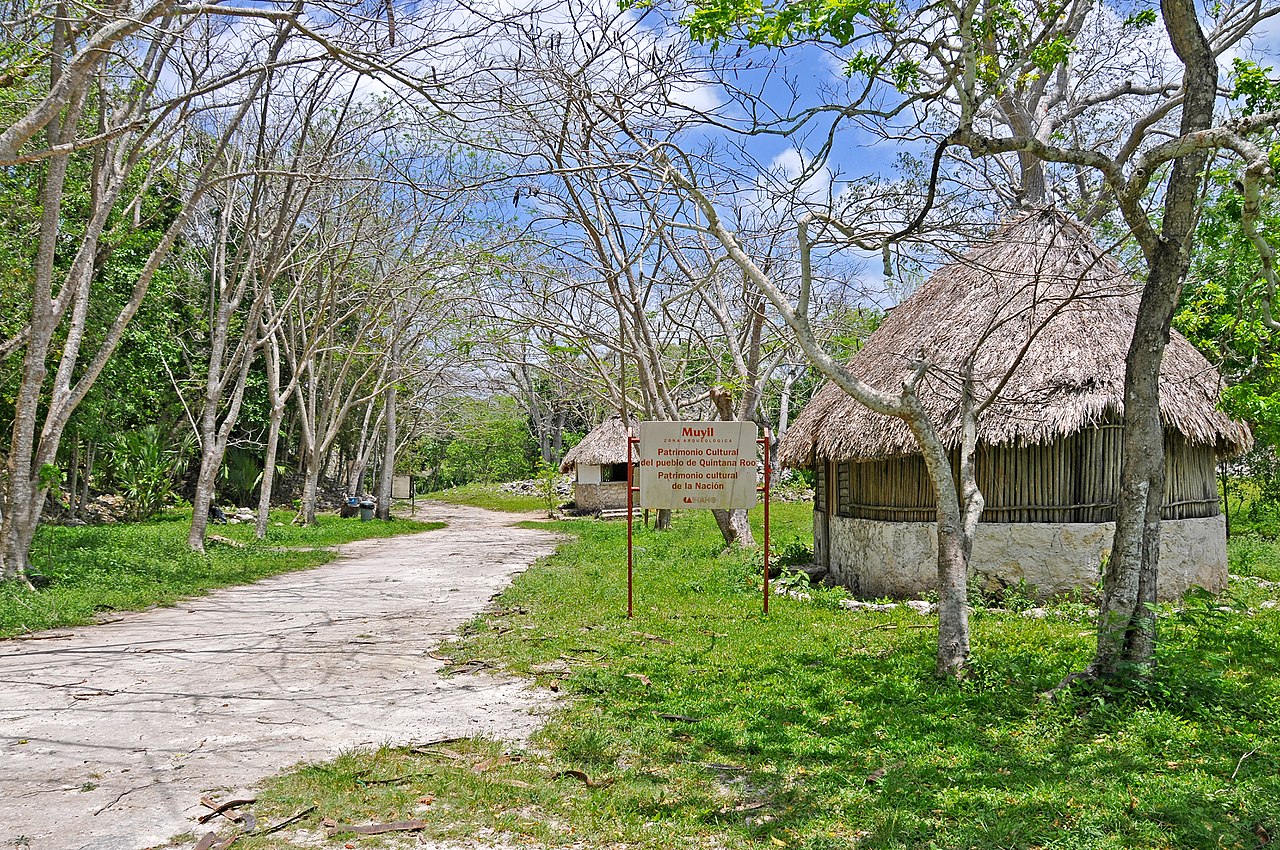
Muyil does not have the dramatic clifftop position of Tulum or the sprawling scale of Cobá. What it does have is a sense of stillness that is increasingly rare among accessible Mayan ruins on the Caribbean coast. Set inside the Sian Ka'an Biosphere Reserve, about 20 km south of Tulum, this compact Petén-style site sits on the edge of a freshwater lagoon and was one of the earliest and longest-inhabited settlements on the eastern Yucatán Peninsula. You can explore the ruins in under two hours, then extend the day with a float through the ancient canals the Maya built to move goods between the jungle interior and the coast.
Why Muyil?
Most visitors to the Riviera Maya stick to Tulum and Cobá, which means Muyil stays quiet even during high season. The site saw its peak activity from the Early Classic (around 250 CE) through the Post Classic (roughly 1150 CE), and it functioned as a trading hub connected to Cobá, some 44 km to the north. Jade, obsidian, honey, salt, feathers, and cacao moved along the canals that still cut through the reserve today. The architecture is Petén-style — steep-walled pyramids and clean lines more reminiscent of Tikal than of the coastal sites most tourists visit. The main pyramid, known as El Castillo, rises about 15 metres and offers a panoramic view over the surrounding canopy and lagoons.
If you are looking for a ruin that feels like a discovery rather than a checkpoint, Muyil delivers.
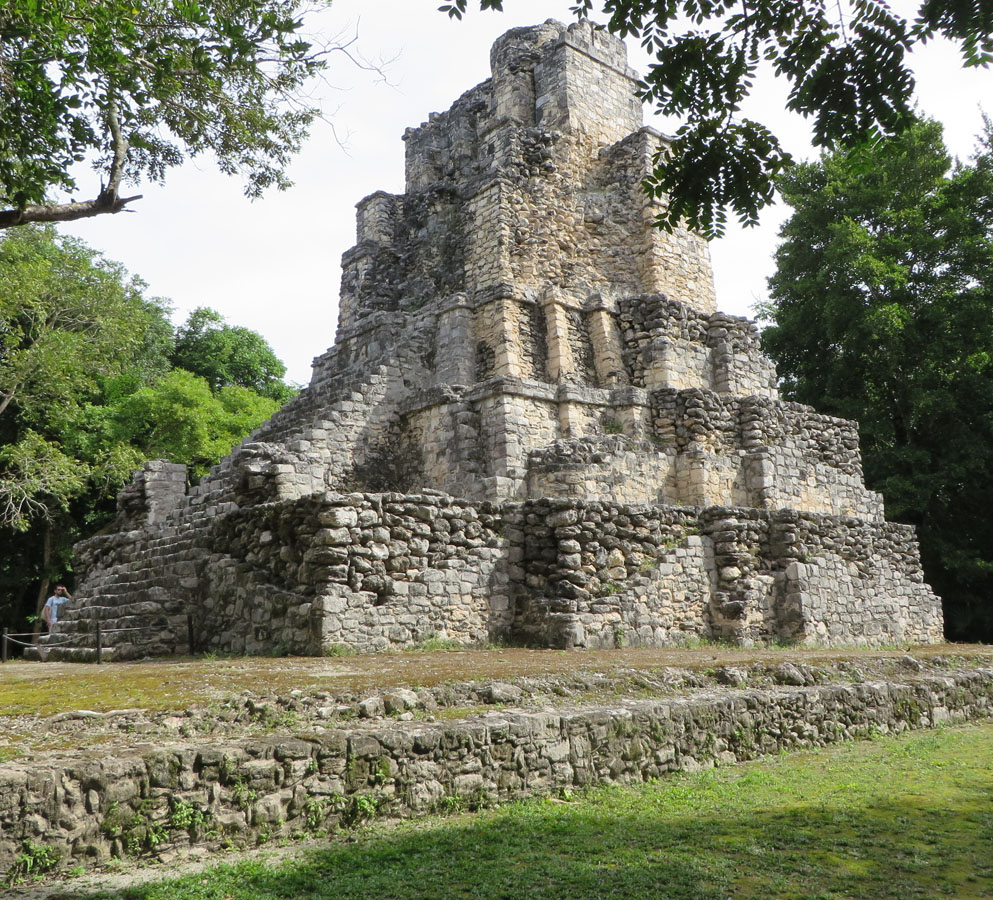 Mayan ruin at Muyil, Sian Ka'an Biosphere Reserve
A Brief History
Archaeological evidence places the earliest settlement activity at Muyil around 300 BCE, with permanent construction beginning during the Classic period (250–900 CE). The site's position beside the lagoons — Muyil and Chunyaxché — gave it direct access to the Caribbean via a network of canals, some of which are still navigable today. The Maya used these waterways to transport trade goods up and down the coast and as far south as present-day Belize. The canals were dug through the limestone substrate and lined with packed earth, engineering that has survived over a thousand years of seasonal flooding and tropical growth.
Muyil maintained close ties with Cobá for much of its history, and the two sites share architectural features — particularly the Petén-style steep pyramids and the use of sacbes (raised white roads) to connect building groups — that reflect their trade relationship. At its peak, Muyil controlled much of the coastal trade between the interior settlements and the reef-lined shore. The site remained occupied until around 1200–1500 CE, making it one of the longest continuously used settlements on the eastern peninsula. Today, the ruins are managed by INAH (Mexico's National Institute of Anthropology and History) and sit within the UNESCO-listed Sian Ka'an Biosphere Reserve, which protects over 500,000 hectares of tropical forest, mangroves, lagoons, and coastal reef.
What to See
The site is compact and easy to navigate. Most visitors spend 60 to 90 minutes walking the main paths.
El Castillo is the main draw. The steep pyramid rises about 15 metres above the jungle canopy, and from the top you get a 360-degree view of the lagoon and surrounding forest. A temple structure sits at the summit, and the walls retain the clean Petén-style stonework — large, precisely fitted blocks with steep, narrow doorways — that distinguishes Muyil from other coastal sites. Climbing may be restricted depending on current INAH rules; check at the entrance before planning your visit.
The Entrance Plaza is a cluster of low structures near the ticket booth. Several stelae (carved stone monuments) and small platforms are scattered around this area, along with unrestored mounds that give a sense of how much of the site remains to be fully excavated. The stelae are worth a close look — some retain traces of carved glyphs that reference the site's trading connections and rulers.
Structure 7H-3 (the Temple) is a consolidated building with visible doorways and interior space. It sits along the main sacbe (raised walkway) that runs through the site toward the lagoon. The temple's roof comb is partially intact, and the interior walls show remnants of the original plaster finish that once covered the entire structure.
The Lagoon Trail is a straight walk along Sacbe 1 that leads from the ruins to the edge of the Muyil lagoon. The trail passes through subtropical rainforest and an observation tower before reaching the water. The lagoon itself is calm, freshwater, and surrounded by mangroves — a sharp contrast to the beach clubs just 20 km to the north. The water is clear enough to see fish and aquatic plants along the edges, and the birdlife along this trail can be excellent in early morning.
 Muyil Entry Plaza ruins
Getting There
Muyil is located off Highway 307, about 20 km south of Tulum and roughly 130 km south of Cancún. The turnoff is marked and easy to spot if you are watching for it on the left-hand side heading south.
By car: From Tulum town centre or the beach zone, head south on Highway 307. In about 20 minutes you will see the sign for Muyil on the left. There is a parking area near the ruins entrance. If you are coming from Playa del Carmen, the drive takes about 50 minutes; from Cancún, about 1 hour 40 minutes.
By colectivo: Colectivos running between Tulum and Bacalar/Chetumal along Highway 307 can drop you at the Muyil turnoff. Confirm with the driver before boarding — not all drivers know the site by name, but "Muyil" or "las ruinas de Muyil" should be understood. From the highway turnoff, it is a short walk (about 500 metres) to the site entrance.
By taxi: A taxi from Tulum costs around 200–300 MXN one way. Negotiate the fare before getting in, or confirm the meter is used. This is the most convenient option if you are not driving and do not want to wait for a colectivo on the highway.
Organised tours: Many Tulum-based operators offer half-day and full-day tours that combine the ruins with a canal float, birdwatching, and lunch in a Mayan community. Prices vary widely (from about 500 to 1,500 MXN per person), so check what is included — a good tour will cover the biosphere entrance fee, a guide, the canal experience, and transport.
 Structure 7H-3 temple at Muyil
Entrance Fees and Hours
The Muyil ruins charge an entrance fee of around 70 MXN per person (approximately USD 4). Some sources cite a higher figure of around 145 MXN (approximately USD 8.50), which may reflect the combined biosphere reserve fee. Bring pesos in cash — card payment is not reliably available at the site.
The Sian Ka'an Biosphere Reserve itself has a separate entrance fee of about 220 MXN per person, payable at the Mayan Arch checkpoint on the coastal road or at the Muyil access point depending on your route. You will receive a bracelet to wear during your visit.
Opening hours are typically 9:00 to 17:00 daily, though some sources note 8:00 to 17:00. The site is open seven days a week. Arriving early gives you the best chance of having the ruins to yourself and spotting wildlife in the cooler morning hours.
The Canals: Floating Through History
The canals are what set Muyil apart from other Mayan ruins in Quintana Roo. The Maya dug these channels to connect the inland settlements with the Caribbean coast, and they are still navigable today. Most canal tours involve floating on your back (or in a small boat) through the calm, clear water, surrounded by mangroves and the sounds of birds.
The float is gentle and does not require any special skill — life jackets are provided. The experience lasts about 30 to 60 minutes depending on the operator and route. It is best booked as part of a guided tour, which typically includes transport, the ruins visit, the canal float, and sometimes lunch.
If you are visiting independently, you can arrange the canal experience through local operators in Tulum or at the reserve entrance. Do not attempt to enter the canals on your own — the ecosystem is protected and access is controlled.
Practical Tips
- Cash: Bring enough pesos for the ruins entrance, the biosphere fee, and any guide or canal tour. There is no ATM at the site.
- Water and sun protection: There is limited shade on the ruins themselves. Carry water, wear a hat, and use sunscreen.
- Insects: The jungle setting means mosquitoes and other insects are present, especially in the rainy season (June to October). Bring repellent.
- Footwear: Wear closed-toe shoes or sturdy sandals. The paths are unpaved and can be uneven.
- Time needed: Plan 1.5 to 2 hours for the ruins alone, or a half-day (4 to 5 hours) if you are adding the canal float and birdwatching.
- Combine with: Muyil pairs well with a visit to the nearby cenotes (Cenote Escondido, Cenote Cristal) or a drive further south to the lagoons at Bacalar. It also works as a stop on the way between Tulum and Bacalar/Chetumal.
- Best time to visit: Early morning (9:00 to 11:00) for cooler temperatures and fewer people. The site is enjoyable year-round, but the rainy season can make paths muddy.
- Family-friendly: Yes. The site is compact and manageable for children who can walk short distances. The canal float is suitable for all ages with life jackets provided.
Who It Suits
Muyil is for the traveller who has already seen Tulum and Cobá and wants something quieter. It suits history enthusiasts interested in trade networks and Petén-style architecture, nature lovers who want to combine ruins with jungle and lagoon wildlife, and anyone looking for a half-day experience that feels removed from the resort zones. If you need dramatic photo backdrops or extensive climbing, Tulum or Cobá are better choices. If you want a calm, uncrowded site where you can hear birdsong between the ancient walls, Muyil is worth the short drive from Tulum.