
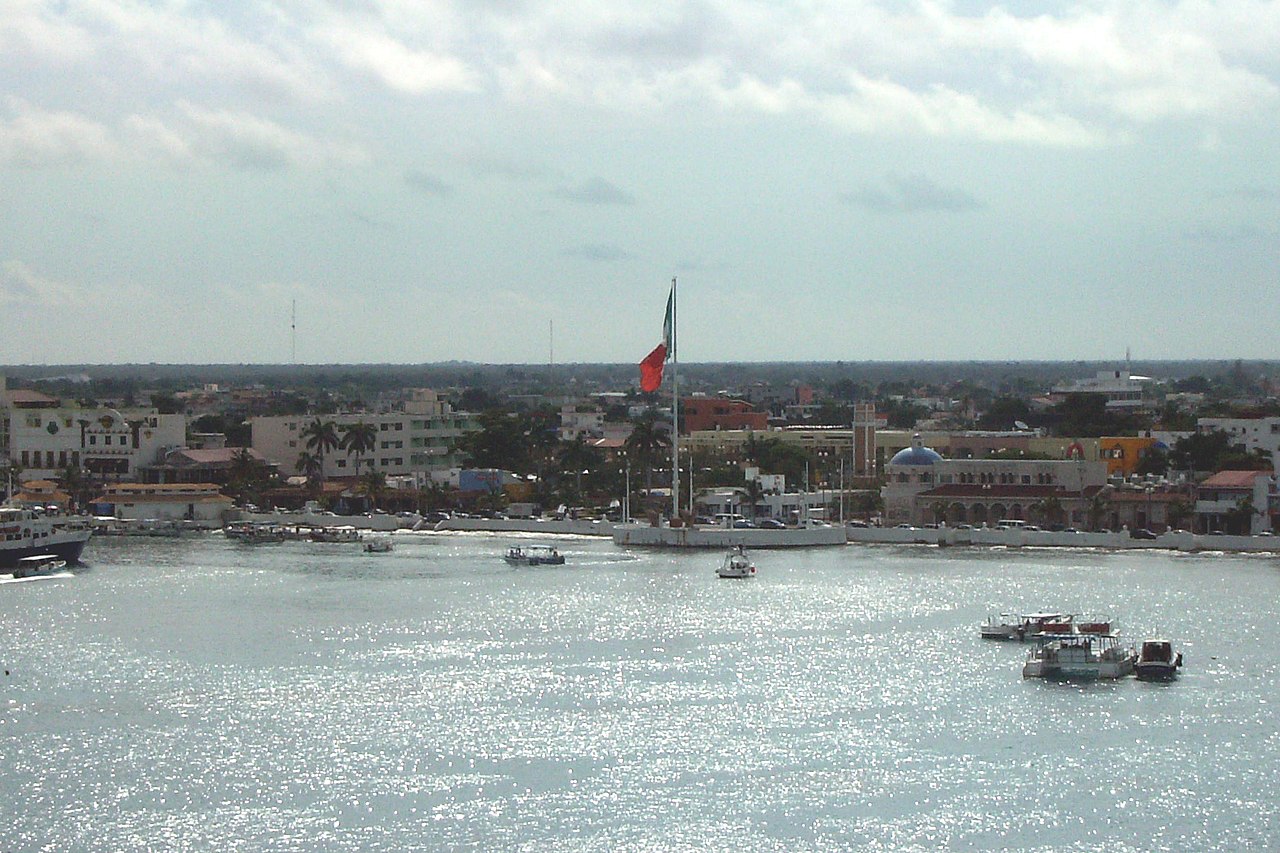
 Aerial view of Cozumel
Cozumel sits 19 kilometres off the Caribbean coast of Quintana Roo, a 49-kilometre-long island separated from Playa del Carmen by a channel of turquoise water. It is best known for one thing: the reef. The Mesoamerican Barrier Reef — the second-largest coral reef system on earth — runs along the island's west and south coasts, and it is the reason most people come. But Cozumel is more than a dive stop. It has a genuine town in San Miguel, quiet eastern beaches, a Mayan ruin or two, and an atmosphere that feels noticeably more relaxed than the mainland resort strip.
Three to five days is the right amount of time for most visitors. Divers may want longer. A day trip from Playa del Carmen works if you only want a taste, but you will not see the island that way.
Getting to Cozumel
From Playa del Carmen by ferry is the most common route. Three operators — Ultramar, Winjet, and Xcaret Ferry — run passenger ferries across the channel. The crossing takes 35–45 minutes. Departures run roughly every hour from early morning until 9 or 10 PM, with higher frequency between 8 AM and 6 PM. A one-way ticket costs around 250 MXN (~15 USD). Ferries arrive at the downtown terminal in San Miguel, steps from restaurants, taxis, and the main plaza.
You do not need to book in advance. Most travellers show up, buy a ticket at the kiosk near the Playa del Carmen pier, and take the next departure. Buying one-way gives you flexibility on the return.
By air, Cozumel International Airport (CZM) receives direct flights from several US cities, as well as domestic connections from Mexico City, Monterrey, and other hubs. Airlines serving CZM include American Airlines, United, Delta, Aeromexico, Volaris, and Viva. The airport is a five-minute drive from San Miguel. Taxis are not permitted inside the terminal, but you can hail one on the street just outside. Rental cars are available from agencies at the airport.
From Cancún, you can fly direct or take a shuttle to Playa del Carmen (about 45 minutes) and then the ferry. There is no direct ferry from Cancún to Cozumel.
Diving and Snorkeling
This is the main event. Cozumel's drift dives are legendary — gentle currents carry you along walls and coral formations at a relaxed pace, with visibility that regularly reaches 20–40 metres. The water stays warm year-round (26–29°C), and the reef is healthy and well-protected within the Arrecifes de Cozumel National Park.
Palancar Reef is the most famous dive site, a 3.5-mile stretch on the southwest coast divided into sections. Palancar Gardens is shallow and calm, good for beginners and snorkelers. Palancar Caves and Palancar Horseshoe offer swim-throughs and deeper formations for intermediate divers. Deep Palancar drops to 35 metres and is best for experienced divers.
Columbia Reef (sometimes called Colombia) is another standout — massive coral pinnacles rising from the blue, with large schools of fish and the occasional eagle ray. Santa Rosa Wall is a dramatic drop-off with overhangs, giant sponges, and friendly grouper.
For snorkelers, the best accessible spots include El Cielo, a shallow sandbar south of the island where you can wade in waist-deep water and see starfish scattered across the ocean floor. Most snorkel tours combine El Cielo with stops at Palancar and Columbia reefs. Shore snorkeling is possible at Chankanaab Beach Park and near some of the beach clubs along the west coast, though the best reef access is by boat.
Dive operators are plentiful in San Miguel and at most resorts. A two-tank boat dive typically costs 800–1,200 MXN (~45–70 USD). Snorkel tours run 500–800 MXN (~30–45 USD). PADI Open Water certification courses are available for around 5,500–7,000 MXN (~300–400 USD).
 Cozumel coastline, Quintana Roo
Beaches
Cozumel's beaches fall into two distinct categories. The west coast faces the mainland and has calm, swimmable water, sandy stretches, and beach clubs with food and drink service. This is where most resorts are located, and it is the side you see from the ferry as you arrive.
Playa Palancar on the southwest coast is a reliable choice — soft sand, shallow entry, and good snorkeling just offshore. Playa Mia Grand Beach Park and Mr. Sancho's are popular beach club options with pools, restaurants, and water sports. These charge an entrance fee (around 400–600 MXN) that includes food and drinks at the higher end.
The east coast is wilder and mostly undeveloped. The surf is stronger, the water rougher, and there are fewer facilities. But it is also where you will find the island's most atmospheric spots. Chen Rio is a sheltered beach on the southeast with a seafood restaurant and a protected swimming area — one of the few east-coast beaches where it is safe to get in the water. Punta Sur at the southern tip is an ecological reserve with a lighthouse, a small Mayan ruin (El Caracol), and long stretches of empty beach.
Sargassum affects Cozumel far less than the mainland coast. The island's position in the open Caribbean means seaweed tends to wash past rather than accumulating on the west-coast beaches. This is one of Cozumel's practical advantages during sargassum season (roughly April to August).
San Miguel de Cozumel
San Miguel is the only town on the island, with a population of roughly 100,000. It is walkable, safe, and more authentically Mexican than the resort strips of Cancún or Playa del Carmen. The centre revolves around Benito Juárez Park, where locals gather in the evenings and weekend nights bring live music and food stalls.
The main shopping and dining streets radiate from the park and from the waterfront malecón. You will find a mix of tourist-oriented restaurants near the ferry pier and more local spots a few blocks inland. Seafood is the specialty — ceviche, grilled whole fish, and lobster are widely available. Ix Kool (Yucatecan cuisine), Bajau (seafood and steak), and Buccanos at Night (upscale seafood) are consistently well-reviewed. For a low-key local meal, the market area north of the plaza has simple restaurants serving fresh fish at reasonable prices.
The Cozumel Museum near the waterfront covers the island's Mayan history, marine ecology, and the annual El Cedral festival. It is small but worth an hour if you are interested in context.
Where to Stay
Most visitors stay along the west coast, either in San Miguel itself or at one of the resort strips to the north or south.
In San Miguel, you will find small hotels, guesthouses, and vacation rentals within walking distance of the ferry, restaurants, and dive shops. This is the best base if you want to be in town, eat locally, and avoid resort pricing. Options range from budget hostels (from ~400 MXN/night) to boutique hotels (1,500–3,000 MXN/night).
North of San Miguel, the hotel zone has larger all-inclusive resorts — Fiesta Americana, Cozumel Palace, Occidental — with private piers, pools, and organized activities. These suit families and travellers who want everything in one place. Rates for all-inclusives typically start around 3,500 MXN per person per night.
South of San Miguel, the Explorean is a boutique all-inclusive set in jungle grounds near the reef. It is quieter and more nature-oriented, with daily excursions included. At the southern end, the InterContinental Presidente is a long-standing favourite with divers, offering a private pier and an on-site dive shop.
Budget travellers should look at guesthouses in the Gonzalo Guerrero neighbourhood, south of the centre, or along Calle 21 and surrounding streets. Several well-reviewed options go for 500–1,000 MXN per night.
Getting Around the Island
Taxis are plentiful in San Miguel and charge set rates to most destinations on the island (typically 100–300 MXN depending on distance). There is no Uber or ride-sharing on Cozumel.
Scooter rental is the most popular way to explore independently — expect to pay 300–400 MXN per day. An international driving licence is technically required but rarely checked. The island's main coastal road is a loop of about 60 kilometres, and driving the full circuit in a day gives you a good sense of the landscape.
Rental cars are available at the airport and in town. Roads are generally in decent condition, though some southern stretches are unpaved. Parking is easy to find outside San Miguel.
Colectivos (shared vans) run along the main road between San Miguel and the southern resorts. They are cheap (around 30 MXN) but infrequent and not always reliable for timing.
Practical Information
- Currency: Mexican peso. ATMs are available in San Miguel. Cards are accepted at most restaurants, dive shops, and hotels, but carry cash for taxis, small vendors, and market stalls.
- Language: Spanish is the primary language. English is widely spoken in tourist-facing businesses, especially dive operations and hotels.
- Power: 110V with US-style plugs. No converter needed for North American devices.
- Safety: Cozumel is considered one of the safer destinations in Mexico. The tourist areas are well-patrolled, and violent crime against visitors is rare. Normal precautions apply — watch your belongings, avoid isolated areas at night.
- Best time to visit: December through April offers the calmest seas and best visibility for diving. May through November is warmer, less crowded, and cheaper, but brings more rain and the possibility of hurricanes (peak season is September–October). Cozumel's diving is excellent year-round.
- Cruise ship days: When large cruise ships are in port (usually midweek), San Miguel and popular attractions can be crowded. Check the cruise schedule if you want to avoid peak days.
Tips
- Book dive operators in advance during high season (December–March), especially for popular sites like Palancar and Columbia.
- If you are not a diver, a snorkel tour to El Cielo is still worth doing — the water is shallow, clear, and full of marine life.
- Rent a scooter or car for at least one day to explore the east coast and Punta Sur. The west coast is where the resorts are, but the east is where you feel the island.
- Bring reef-safe sunscreen. Chemical sunscreens damage the coral and are increasingly discouraged by dive operators.
- The last ferry back to Playa del Carmen departs around 9 PM (check the schedule, as it varies by operator). Do not miss it unless you have a plan to stay the night.
Cozumel rewards travellers who spend more than a day on the island. The reef is the headline, but the town, the food, and the slower pace are what make people come back. If you are already on the Riviera Maya, the ferry ride is short and the island is worth the detour.
Planning a trip to Cozumel? Our Trip Plan & Booking Portal can help you arrange ferries, dive tours, and accommodation. For personalised advice, reach out via WhatsApp — we are happy to help you plan.

