Quintana Roo holds some of the most accessible and visually striking Mayan ruins on the Yucatán Peninsula. Unlike the inland sites of Yucatán state, these coastal and jungle-set ruins offer something different: turquoise backdrops, fewer tour buses (at the smaller sites), and the chance to pair a morning of archaeology with an afternoon at a cenote or beach.
Here are the four best Mayan ruins in Quintana Roo, ranked by what they offer a visitor planning a Riviera Maya trip.
Tulum: The Clifftop Fortress
 Tulum ruins overlooking the Caribbean Sea, Quintana Roo
Tulum is the most visited ruin in Quintana Roo, and the only major Mayan site built directly on the Caribbean coast. It was a trading port between the 13th and 15th centuries, handling turquoise, jade, and obsidian along coastal routes. The 784-metre wall enclosing three sides of the site made it one of the few fortified Mayan cities.
What to see: El Castillo (the main temple, perched on a cliff above the sea), the Temple of the Frescoes with its preserved murals, and the Temple of the Descending God. The walk along the wall gives a clear sense of how the city was laid out.
Practical details:
- Entrance: 90 MXN (about US$5) for foreign adults
- Hours: 8:00 AM – 5:00 PM, last entry 4:30 PM
- From Playa del Carmen: 1 hour by car or colectivo (around 45 MXN)
- From Cancún: 2 hours by car; ADO bus runs direct
- Tip: Arrive at opening. By 10:30 AM the site fills with tour groups. There is a beach below the ruins accessible from inside the site — bring swimwear if you want to cool off after exploring.
Tulum is compact and can be seen in 60–90 minutes. It works well combined with a cenote visit (Gran Cenote is 5 minutes away) or a beach afternoon at Playa Paraíso.
GuideThings to Do in Tulum: a Local's 2026 Activity GuideFrom clifftop Mayan ruins and jungle cenotes to biosphere reserves and barefoot beach clubs — the complete guide to Tulum activities, with honest logistics for both the Pueblo and the Zona Hotelera.Open
Cobá: The Jungle Giant
 Nohoch Mul pyramid at Cobá, the tallest in the Yucatán Peninsula
Cobá is the most rewarding ruin in Quintana Roo for travellers who want to spend more than an hour at a site. Spread across dense jungle, it was one of the largest Mayan cities in the region, connected to other settlements by an extensive network of raised stone roads called sacbés.
What to see: The Nohoch Mul pyramid — at 42 metres, it is the tallest structure in the Yucatán Peninsula and you can still climb it (unlike El Castillo at Chichén Itzá). The ball court, the painted stelae in the Grupo de las Pinturas, and the Conjunto de las Miniaturas are all worth your time. The site covers several kilometres, so rent a bicycle (40 MXN) or a triciclo with a driver (200 MXN) at the entrance.
Practical details:
- Entrance: 100 MXN (about US$5.50)
- Hours: 8:00 AM – 5:00 PM
- From Tulum: 45 minutes by car inland on Highway 109
- From Playa del Carmen: 1.5–2 hours by car
- Tip: Bring at least 2 litres of water per person, sunscreen, and insect repellent. The jungle shade helps, but the distances are real. Early morning gives the best chance of spotting spider monkeys and tropical birds.
Three cenotes (Choo-Ha, Tankach-Ha, and Multun-Ha) sit just a few kilometres from the site entrance — a good way to cool down after a few hours of walking.
Muyil: The Quiet One
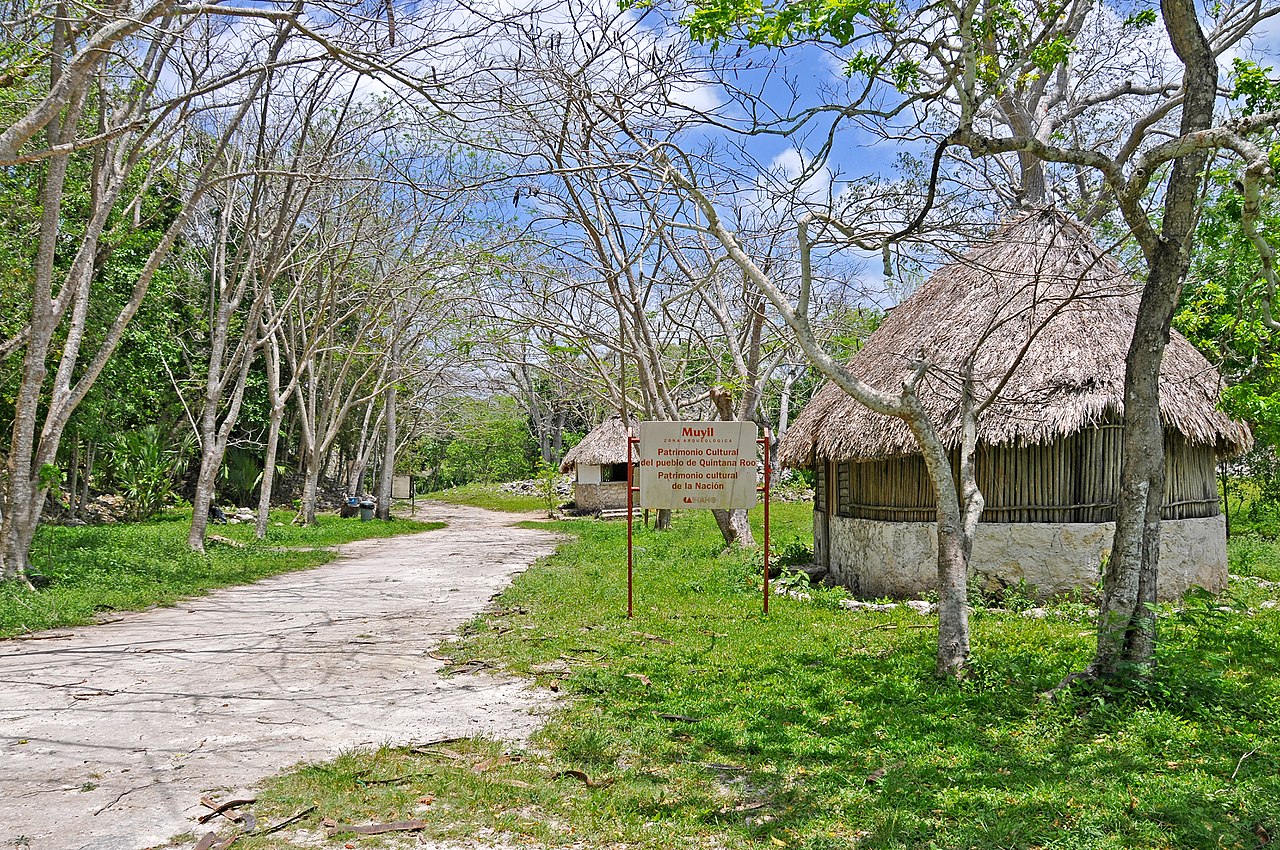
Muyil (also known as Chunyaxché) is the antidote to Tulum's crowds. Located 20 km south of Tulum inside the Sian Ka'an Biosphere Reserve, it is one of the earliest inhabited Mayan sites on the eastern coast, with artefacts dating to 350 BC.
What to see: The main pyramid (El Castillo at Muyil, not to be confused with Tulum's) rises above the jungle canopy and offers views across the lagoon and surrounding wetlands. The sacbé trails connecting the structures are atmospheric — you walk through dense forest with the sound of birds and insects, not tour groups. A separate trail leads from the ruins to the Muyil canals, where you can float through ancient Mayan waterways on a guided boat tour.
Practical details:
- Entrance: Around 210 MXN (about US$11.50) — this includes access to the lagoon trail
- Hours: 8:00 AM – 5:00 PM
- From Tulum: 25 minutes by car south on Highway 307
- Tip: The site reopened in February 2026 after restoration work. Check current status before visiting. Bring insect repellent — the wetland environment means mosquitoes, especially in the rainy season (June–October).
Muyil is best for travellers who want a slower, more contemplative experience. Budget 1.5–2 hours for the ruins and canals combined.
San Gervasio: Cozumel's Sacred Site
San Gervasio is the largest of Cozumel's 34 known Mayan settlements and was an important pilgrimage site dedicated to Ixchel, the goddess of fertility and childbirth. For centuries, Mayan women travelled here from across the peninsula to seek blessings.
What to see: The central plaza with its restored altar, the Ka'na Nah (Tall House) — the site's tallest structure — and the remains of the old sacbé road that once connected the site to the coast. The jungle setting is lush and the site is rarely crowded.
Practical details:
- Entrance: Around 150 MXN (about US$8)
- Hours: 9:00 AM – 3:45 PM
- Getting there: Take the ferry from Playa del Carmen to Cozumel (about 45 minutes, 250 MXN return), then a taxi to San Gervasio (20 minutes from the ferry terminal)
- Tip: Combine with snorkeling at Colombia or Palancar reef in the afternoon. The site itself takes about 45 minutes to explore.
How to Choose
| Site | Best for | Time needed | Crowd level |
|---|---|---|---|
| Tulum | First-time visitors, photography, beach combo | 1–1.5 hours | High |
| Cobá | Adventure, climbing, jungle atmosphere | 2–3 hours | Medium |
| Muyil | Solitude, nature, Sian Ka'an access | 1.5–2 hours | Low |
| San Gervasio | Cozumel visitors, cultural history | 45 minutes | Low |
If you only have time for one, Tulum gives the most dramatic setting. If you have a full day and a rental car, combine Cobá with the nearby cenotes and Punta Laguna spider monkey reserve. For something off the beaten path, Muyil is the pick.
Need help planning your ruin-hopping day? Our Trip Plan & Booking Portal can connect you with trusted local drivers and certified guides who know these sites well.