
There is no permanently sargassum-free beach in the Riviera Maya. Floating seaweed moves with wind and currents, and conditions can change overnight. The most dependable strategy is to choose a coast that is naturally less exposed, check same-day reports, and keep a cenote or pool as a backup.
For travellers willing to take the ferry, Cozumel’s west coast usually offers the strongest chance of clearer water. On the mainland, protected bays and beaches with active cleaning can sometimes be better than neighbouring stretches, but none can be promised in advance. The main drawback is that the places least affected often require extra transport, commercial access or a full-day plan.
The practical answer
When the mainland is receiving heavy sargassum, consider these options in this order:
- Cozumel’s west coast for the most reliable coastal alternative.
- A recently checked mainland beach where local reports show light conditions that morning.
- A cenote or hotel pool when the coast is broadly affected.
- A west-facing or sheltered excursion outside the immediate Riviera Maya only when the extra journey is worthwhile.
Do not choose a beach from a seasonal list alone. In 2026, Quintana Roo reported an unusually early arrival, and Playa del Carmen recorded substantial cleanup volumes during June. This makes live information more useful than a claim that one beach is always clear.
Why some beaches receive less sargassum
Most Riviera Maya beaches face east toward the Caribbean. Floating sargassum arriving from offshore can therefore reach long stretches from Puerto Morelos through Playa del Carmen, Akumal and Tulum.
Local conditions still differ because of:
- Wind direction and strength
- Offshore currents
- Reefs and headlands
- The angle of the shoreline
- Bays that trap or redirect floating material
- Municipal or resort barriers
- Daily manual and mechanical cleaning
- Recent storms and rainfall
A reef-protected bay is not automatically clear. Once sargassum passes through a reef opening, calmer water can hold it near shore. A hotel beach may look clean on the sand while brown water or floating mats remain offshore.
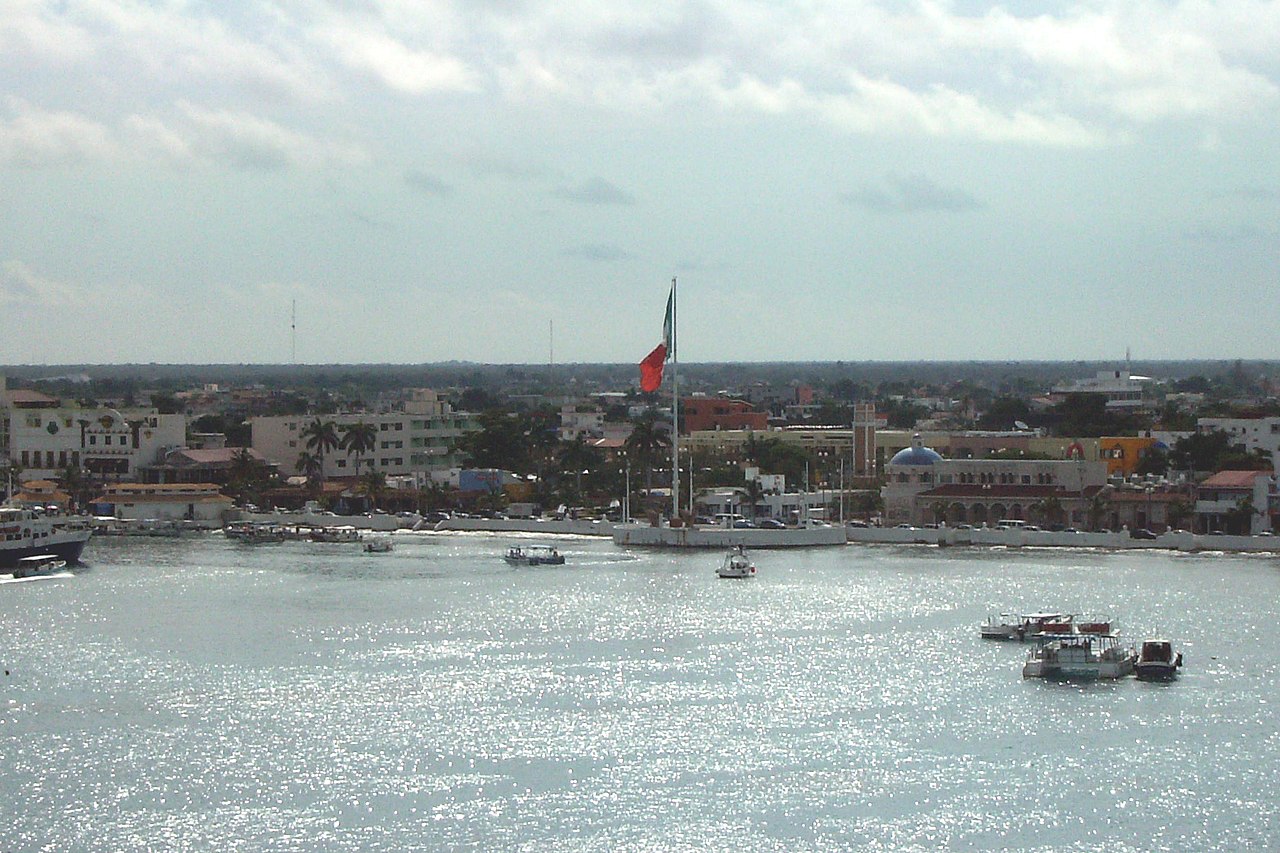
Cozumel is different because its west coast faces the channel toward the mainland. The island’s east coast receives direct Caribbean exposure and is usually more vulnerable, while the west side is often protected by the island itself. Cozumel authorities have repeatedly identified the eastern side as the more affected coast, although occasional arrivals can still reach the waterfront and west-coast beaches.
Cozumel’s west coast
Cozumel’s west coast is the most practical answer when swimming in clearer sea matters enough to justify a ferry trip. Beaches and clubs south of San Miguel face the mainland rather than the open Caribbean, so they often avoid the heavier accumulation seen on the island’s eastern shore and the Riviera Maya mainland.
Useful west-coast choices include beach areas around:
- Playa Palancar
- Playa San Francisco
- Chankanaab
- Money Bar and nearby rocky-entry clubs
- Southern hotel and beach-club zones
These are not interchangeable. Some have sandy shallows, while others use steps or ladders into deeper water over rock. Some are public beach areas with nearby services; others are commercial clubs with entry terms, minimum spending or activity packages.
Who Cozumel suits
Choose Cozumel when:
- Clearer water is the main priority.
- You can commit most of a day.
- You are comfortable using the passenger ferry and a taxi or rental vehicle afterward.
- You want snorkeling as well as swimming.
- A beach club’s food, bathrooms and shade are useful.
Choose another plan when:
- You have only a few hours.
- Ferry motion is a concern.
- You need a completely free outing.
- Cruise-ship crowds or several transport stages would make the day difficult.
- Weather may disrupt ferry operations.
Check ferry departures on the day rather than relying on an old timetable. After arriving in San Miguel, a taxi is normally the simplest way to reach the southern beach zone. Confirm the fare before departure and arrange the return with enough time for the ferry.
Plan a full day. Avoid booking the last practical return sailing when you have a flight, airport transfer or important evening reservation.
Playa Palancar
Playa Palancar is one of the better-known sandy options on Cozumel’s west coast. It can work for couples, families and travellers who want an easier beach entry than the rocky snorkeling clubs closer to town.
The practical limitations are distance from the ferry terminal and variable commercial arrangements. Taxi costs, restaurant operations, lounger policies and opening hours can change. Confirm the current setup before travelling, especially in quieter periods.
The water may still contain scattered seaweed, and weather can make any beach less comfortable. Check recent images or ask the venue directly on the morning of the visit.
Chankanaab and west-coast snorkeling clubs
Chankanaab and several clubs along the west coast are useful when access to bathrooms, food, equipment and a managed water entry matters more than finding a broad free beach.
These places can be good for confident swimmers and snorkellers because the channel side often has clear water. However, many entries are rocky or lead quickly into deeper water. Families with toddlers, weak swimmers and travellers with limited mobility should ask exactly how the water is reached.
Commercial prices, packages and opening hours vary. Verify them directly and ask whether towels, lockers, loungers, snorkeling equipment and transport are included.
Can you find a clear beach on the mainland?
Yes, but mainland conditions are less predictable. During moderate arrivals, one beach can be usable while another a few kilometres away has heavy accumulation. Wind may push floating material away from one section for several hours and return it later.
The strongest mainland strategy is not to select one permanent “sargassum-free” beach. Instead:
- Check municipal beach reports early that morning.
- Look for photographs posted within the previous day.
- Ask the hotel or beach club for a current image of the waterline.
- Compare more than one nearby beach before paying for transport.
- Leave early, because wind often strengthens later.
- Keep a cenote close enough to use as a backup.
Be cautious with colour-coded maps that do not show when their observations were made. A map can be useful only when the date, time and reporting method are clear.
Punta Esmeralda
Punta Esmeralda in Playa del Carmen is sometimes suggested during sargassum season because its freshwater outflow can create a separate shallow area near the shore. This does not prevent sargassum from reaching the Caribbean section.
Choose Punta Esmeralda when you want public access, a local atmosphere and a possible freshwater play area for children. Do not choose it on the assumption that the entire beach will be clear.
It is easiest by taxi from central Playa del Carmen. Parking can be limited during weekends and holidays. Bring shade, drinking water and pesos for small purchases. Rain can change the freshwater channel’s appearance and depth, while the open sea remains subject to waves and seaweed.
Puerto Morelos
Puerto Morelos uses offshore barriers and regular cleanup as part of its sargassum response. Its reef also reduces wave energy, but neither measure guarantees a clear shoreline.
The town can be a reasonable mainland choice when same-day reports are favourable. It has ordinary streets leading toward the waterfront, restaurants and a more straightforward independent arrival than resort-controlled bays.
A car, taxi or bus to the town is practical depending on your starting point. Once in the centre, much of the waterfront is walkable. Beach conditions can differ north and south of the main square, so inspect the water before settling.
Puerto Morelos suits travellers who want a town-and-beach day rather than travelling solely for perfect water. Combine a short swim with lunch or a walk through the centre. When accumulation is heavy, use a cenote route or another inland activity instead.
GuideSnorkeling in Puerto Morelos Reef: Best Reefs, Beaches & ToursPlan snorkeling in Puerto Morelos with a practical guide to the National Reef Park, town beaches, boat tours, conditions, access from Cancún and the Riviera Maya, and where to stay.Open
Beaches with intensive cleaning
Large resorts and established beach clubs may remove seaweed frequently, install barriers or use offshore collection systems. This can make the sand more comfortable, but it is not the same as a naturally clear sea.
Before buying a day pass, ask:
- Is the current water clear enough for swimming?
- Is sargassum present offshore as well as on the sand?
- Was the photograph sent today?
- Are barriers currently deployed?
- Is access refundable if conditions deteriorate?
- Are pools included as a backup?
- What are the current parking and visitor rules?
A cleaned resort beach can be worthwhile when a pool, shade, food and bathrooms are part of the day. It is poor value when the sole reason for paying is an assumption that seaweed cannot reach the property.
Beaches that are often wrongly described as sargassum-free
Akumal Bay
Akumal’s reef and curved bay can soften waves, but sargassum still enters and may collect near shore. It should be chosen for a regulated turtle experience or a planned bay visit, not as a guaranteed escape from seaweed.
Soliman Bay
Soliman Bay is sheltered by reef, yet its calm shape can retain floating material once it enters. Access is also difficult without a villa, restaurant arrangement or confirmed operator.
Xpu-Ha
Xpu-Ha has a broad sandy shoreline and commercial services, but it faces east and can receive heavy arrivals. Cleaning varies by access point.
Tulum
Tulum’s open beaches are highly exposed. Hotels and park authorities may clean sections, but summer conditions can still be severe. Do not make a long journey based on edited promotional images.
Paamul and Half Moon Bay
Both are reef-influenced bays where conditions may look better than nearby open coast on a favourable day. Both can also trap seaweed and have rocky or uneven entries. Confirm access and current water quality before travelling.
What about the east coast of Cozumel?
Cozumel’s east coast is scenic and less developed, but it is not the place to seek reliable protection from sargassum. It faces the open Caribbean and receives more direct arrivals.
Beaches such as Chen Río may have sheltered pockets suitable for swimming in calm conditions, but seaweed can accumulate there and municipal cleanup reports have documented substantial removals along the eastern shore.
The east coast also has stronger surf, fewer continuous services and limited mobile reception in places. Visit for the landscape and road trip rather than a promise of clear water. Do not swim where waves, currents or red flags make entry unsafe.
When is sargassum season?
The heaviest risk is generally associated with warmer months, often from spring into early autumn, but the season is not fixed. Arrivals can begin early, continue late or appear briefly during months usually considered quieter.
Quintana Roo began intensified action early in 2026 after significant arrivals before the traditional peak period. This is a reminder that planning by month alone is unreliable.
For lower average risk, the cooler part of the year is often preferable, but no date guarantees a clear beach. Storms and changing currents can alter conditions at any time.
Sargassum, health and comfort
Fresh floating sargassum is a natural marine organism. Problems increase when large quantities accumulate and decompose on shore. The beach may develop a strong smell, insects can gather, and nearshore water may turn brown.
People with asthma, respiratory sensitivity or strong reactions to odours may prefer to leave a heavily affected beach rather than remain beside decomposing piles. Avoid climbing over cleanup machinery or entering areas where workers are moving heavy material.
Do not let children play in decomposing accumulations. Wear footwear around hidden debris, and rinse skin after swimming in murky water.
Jellyfish and other small stinging organisms can arrive with currents and floating seaweed. Their presence is variable. Leave the water when local staff report stings or when swimmers are repeatedly affected.
Family and accessibility considerations
For families, a seaweed-light beach is only useful when the rest of the day works. Prioritise:
- Shade and drinking water
- Toilets and changing space
- A safe water entry
- Short transport stages
- A pool or inland backup
- A manageable return journey
Cozumel beach clubs can provide facilities, but ferry travel and taxi transfers add effort. A mainland resort day pass may be easier with babies even when the sea is imperfect.
Accessibility varies widely. Sandy public beaches, ferry ramps, taxi transfers and rocky water entries can all create barriers. Ask each venue about step-free access, accessible toilets, firm paths, adapted bathing equipment and the exact water entry. Do not rely on the phrase “accessible beach” without confirming current services.
What to bring
Bring:
- Drinking water
- Hat and protective clothing
- Towel
- Reef-conscious sun protection
- Insect repellent
- Waterproof phone pouch
- Water shoes for rocky entries
- Pesos as a cash backup
- Dry clothing for ferry or taxi travel
- Any required medication
- A screenshot of return transport details
Avoid carrying valuable documents to the sand. Do not leave bags visible in a rental car. Glass should stay away from the beach.
How to check conditions on the day
Use at least two recent sources:
- A current municipal, state or naval update.
- A same-day image or direct report from the exact beach.
Then check wind, rain and thunderstorms. A beach with little sargassum may still be unsafe for swimming.
Ask specific questions rather than “Is the beach good?” A useful message is: “Could you send a photo of the waterline taken this morning, and confirm whether there is floating sargassum offshore?”
How long to spend and what to combine
Allow a full day for Cozumel, including ferry and taxi time. Combine a west-coast beach with a short visit to San Miguel rather than attempting several distant beaches.
For Puerto Morelos or Punta Esmeralda, two to four hours is usually enough. Combine the beach with lunch nearby, then move inland if conditions worsen.
Avoid crossing the Riviera Maya to chase small differences shown on an old map. Transport time, heat and traffic can consume the day while the sea changes again.
Practical final advice
The most dependable coastal alternative during heavy mainland sargassum is Cozumel’s west coast, but even there you should verify the exact beach that morning. On the mainland, choose according to live conditions rather than reputation, and favour places where access, shade and a backup pool justify the trip even if the sea is imperfect.
Never build a non-refundable day around a promise of a permanently seaweed-free beach. Check current reports, ask for a same-day image, carry pesos and keep an inland alternative ready. When the entire coast is heavily affected, a cenote is usually a better decision than spending hours searching for one clear patch of sand.


